
By Nancy Gibson
Last fall, my husband Greg and I set out on a cross-country road trip in our campervan. With the help of ChatGPT, Greg drafted an itinerary. In the fall, we slowly worked our way to San Antonio. We flew home over the holidays, then flew back in January to resume our journey.
The second half took us to Key West and up to North Carolina before heading back west. In addition to National Parks and other key points of interest, I wanted to be sure to visit sites related to racial justice and civil rights.
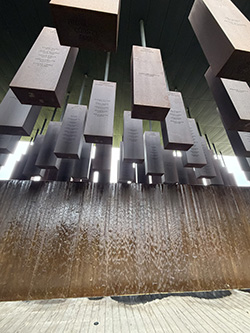 National Memorial for Peace and Justice
A few years back before another campervan trip, I had commented to Vicki that I felt we needed to do more than just go on fun trips for our own enjoyment. She suggested that I learn about the history and the people who had lived in the places that we visited.
During the first leg of our trip, we saw many sites related to Native American history. Once we reached Texas, we began to see more places pertaining to African American history and the Civil Rights Movement. Some of the most powerful stops included the Legacy Sites in Montgomery, the Edmund Pettus Bridge in Selma, the National Civil Rights Museum at the Lorraine Motel, and the Whitney and McLeod Plantations in Louisiana and South Carolina.
During my time in JRR, I have read many books on justice and civil rights issues. However, standing in the places where those events took place was profoundly different.
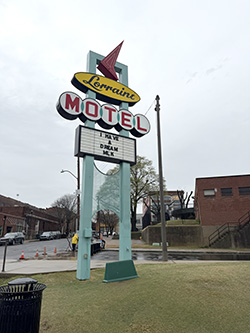 Lorraine Motel in Memphis
Some of these experiences included traveling the Selma-to-Montgomery highway and imagining the marchers walking along the road; standing on Gadsden's Wharf in Charleston where enslaved Africans first set foot in America; looking up at Central High School and picturing the Little Rock Nine bravely walking through a hostile mob into the school. I had not realized how long some of these events lasted and the number of people involved in executing them. The Montgomery Bus Boycott lasted over a year, requiring people to walk and carpool to work or school day after day. The Little Rock Nine not only faced danger on the first day of school, but endured ongoing harassment at school, mobs outside the school, and threats at home.
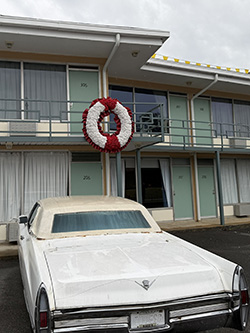 Wreath shows where MLK Jr was shot
What stood out to me about the Civil Rights activists was their sheer grit and perseverance to pursue justice through non-violence even when they themselves were often the victims of violence. They consistently were willing to get into "good trouble," as John Lewis would say. I could not imagine going through what they did or having the courage to face similar adversity. I also realize I have had the privilege of receiving the rights that I benefit from without having had to struggle or fight for them.
If you haven't had the chance to visit some of these places, I would encourage you to go. Wherever you travel, keep an eye out for the local history—sometimes it's in a museum, sometimes in a visitor center, and sometimes on a simple sign at a rest stop. These stories are everywhere, waiting to be acknowledged.
For me, this journey didn't just reinforce history; it deepened my understanding and reminded me of the responsibility we all share to keep learning, remembering, and working toward justice.
Editor's Note: Nancy's PowerPoint presentation on her pilgrimage can be viewed here.